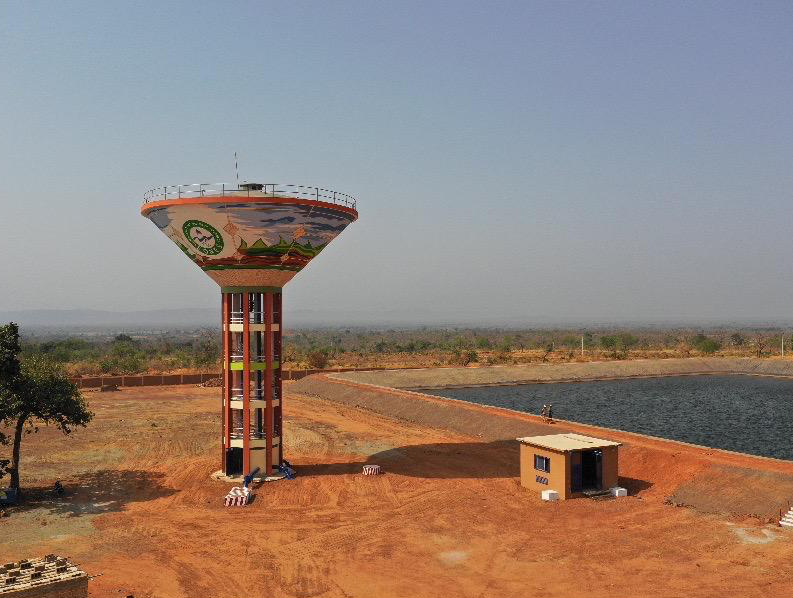
Africa Day: The path to development and water as the foundation of the future
25 May, 2026
In line with the strategic guidelines of the African Union’s Agenda 2063, launched in 2013, the major challenge for the continent in 2026 lies in ensuring the sustainable availability of water and safe sanitation as a prerequisite for achieving social and economic stability in the region. Under this approach, water is established as the indispensable driver of development through three key pillars:
- Industrialisation: without water, there is no possibility of industrial production or scalable B2B growth.
- Food security: implementation of efficient irrigation systems to ensure agriculture is resilient to climate change.
- Public health: achieving a reduction in disease and a direct improvement in the quality of urban life.
Real impact and population reach in Senegal
The water efficiency initiatives carried out in Senegal demonstrate a tangible real impact. Currently, more than 2,500,000 people benefit from the various infrastructure projects developed by Incatema in the country.
The comprehensive technical approach ranges from water abstraction works on the Gambia River to advanced treatment systems in major urban centres such as the capital, Dakar. In terms of the distribution of the population served, this breaks down as follows:
- Dakar & surrounding areas: over 1,000,000 residents benefiting.
- Kédougou / Provinces: coverage focused on priority rural areas.
On a day like today, the technical and social commitment that guides our work remains to ensure water is not just a technical issue; it is about ensuring climate resilience and equal opportunities for millions of people.
Project portfolio in West Africa
The portfolio of engineering projects in the West African region comprises the following specific works and infrastructure:
- Kédougou: Drinking Water Treatment Plant (DWTP) with a capacity of 90 m³/h, supplied by water abstraction from the Gambia River.
- Cambérène: Wastewater Treatment Plant (WWTP) and Submarine Outfall. It features a 1,200-metre-long microtunnel and a treatment capacity at the WWTP of 96,000 m³/day.
- Dakar (Lymodak): Compact Treatment Plant with a capacity of 100 m³/h, specialising in the removal of iron and manganese.
- Foundiougne: Compact Treatment Plant with a capacity of 70 m³/h for the removal of fluorides and chlorides, designed to strengthen the water supply and consequently improve the quality of urban life.
- Nianija Bolong (under construction): River channel conditioning to provide greater storage capacity during the rainy season, covering a 30 km stretch of the Nianija Bolong River.
Integrated water cycle management and investment metrics
The operational strategy addresses the integrated water cycle by allocating resources as follows:
- Water treatment (40%): aimed at ensuring a safe supply for public consumption.
- Sanitation and wastewater treatment (30%): focused on the treatment of urban effluents and outfalls.
- Water abstraction and distribution (20%): focused on the upgrading of watercourses and the efficient transport of the resource.
- Reuse (10%): focused on sustainable use for agriculture.
From a financial perspective, the development and investment metrics associated with these projects are structured under the following key contracts:
- €46.5 million in the Wastewater sector, corresponding to the Cambérène WWTP and the Cambérène Submarine Outfall.
- €31.5 million allocated to the primary sector / water utilisation within the Nianija Bolong project (under construction).
- €12.8 million in investment in drinking water contracts, comprising the Kédougou, Foundiougne and Dakar drinking water treatment plants.
Roadmap to 2063
The development of these goals is part of a strict, forward-looking timetable:
- 2013: official launch of Agenda 2063 by the African Union.
- 2026: Year of Sustainable Water and Sanitation.
- 2030: target date for the achievement of the Sustainable Development Goals (SDG 6).
- 2063: final consolidation of the ‘Desired Africa’ project.
Africa possesses vast resources and talent. At Incatema, we provide the engineering and specialist technical expertise to transform all that potential into real and lasting prosperity, ensuring a sustainable future for generations to come.


