


18 October, 2024
Under the slogan "Early detection saves lives: Check yourself, take care, live!", and coinciding with International Breast Cancer Day, Incatema participates for the third year in a row in the activities carried out by APACAMA, the first non-profit association for the Prevention and Care of women affected by breast cancer in the province of Toledo, Spain.
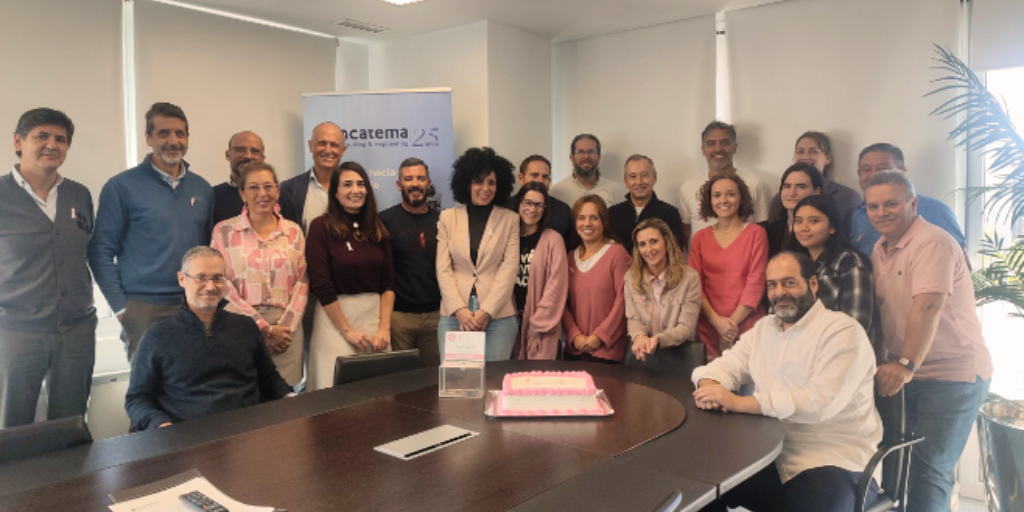
As part of the company's corporate social responsibility actions, and in line with Sustainable Development Goal number 3, Health and Well-being, of UN 2030 Agenda, Incatema participates with a charitable cake brunch and APACAMA's calendar.
The charitable action involves sharing a cake among all employees, who donate one euro per serving. The proceeds are fully donated to the non-profit association with the aim of promoting preventive measures against the disease and providing care for women with breast cancer.
International Breast Cancer Day is celebrated on every October 19th to raise awareness and educate women around the world about the importance of performing breast self-examinations to detect any signs or anomalies.
This date has been promoted by patient organizations worldwide to promote an early diagnosis of breast cancer and increase women's access to timely checks and treatments.
Breast cancer is the leading cause of death among women worldwide.
According to the World Health Organization, 16% of all cancers in female patients are attributed to this condition.
“Estimations are that 1 in 8 women will develop breast cancer at some point in their life. Therefore, breast self-examination and regular check-ups are essential for an early prognosis, as the first step in prevention and awareness in the fight against this disease”, states Sara Martín, Vice President of APACAMA.
International Breast Cancer Day is celebrated globally with the pink ribbon, recognized as a universal symbol.
Every year, 2.3 million new cases of breast cancer are diagnosed in women. Breast cancer causes about 670,000 deaths annually worldwide, according to data from the World Health Organization. The majority of these women live in developing countries, where early detection is scarce due to a lack of awareness and limited access to healthcare services.