


2 February, 2026
Incatema has signed a major contract with the Tanzanian Ministry of Agriculture with funding from the World Bank. The main objective of the project, with a budget of 1.3 million euros, is to support the resilience of the country's agri-food systems through the adoption of climate-resilient technologies. Specifically, the technical assistance will focus on supporting local irrigation communities to improve the Operation, Management and Maintenance of 23 irrigation perimeters across seven regions: Iringa, Mbeya, Morogoro, Katavi, Manyara, Tanga and Kilimanjaro.
The consultant will lead the transfer of knowledge and support the sustainable management of agricultural water use in the 23 irrigation schemes, promoting food security in these 7 regions through a participatory diagnosis, planning and training process.
Leadership in sustainable management of water resources
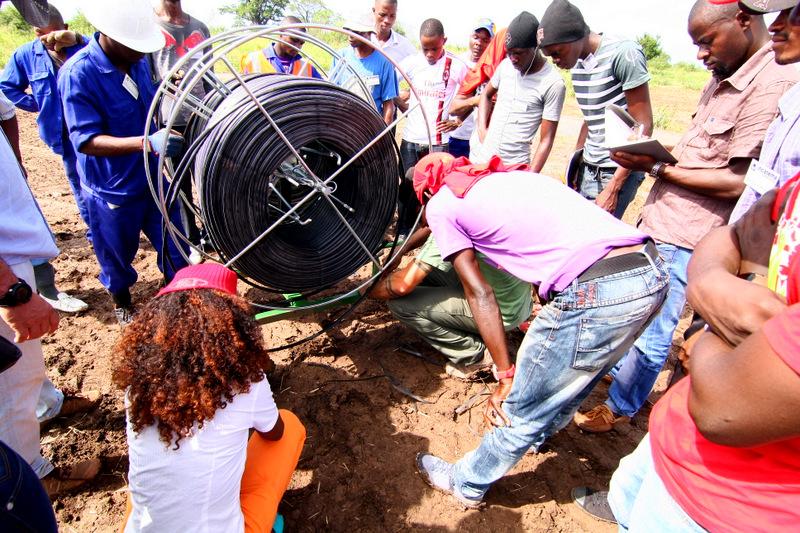
The heart of this contract lies in responsible and efficient water management. The Incatema team, which includes agronomists, irrigation specialists, community and institutional development specialists, will be responsible for defining and formalising the Operation, Management and Maintenance functions together with the irrigation communities. Training will be provided to leading farmers so that the commitments to efficient water management are integrated and assumed by the members of the local irrigation communities.
This process will ensure that water resources are used more efficiently, a crucial factor for Tanzania to mitigate the effects of climate variability and ensure stable food production.
To achieve these objectives, technical assistance will comprise the following three main work elements:
Knowledge Transfer and Training as the Axis of Sustainability
The long-term sustainability of the project is based on the knowledge transfer component led by Incatema. For this purpose Incatema will undertake the following:
The project underscores Incatema's commitment to local empowerment by providing communities with the tools and skills needed to improve the management of their irrigation systems throughout the three-year duration of the contract and promoting subsequent sustainability.
"We are proud to apply our previous experience in a new country for us such as Tanzania to contribute to the sustainability of stronger and more climate resilient agricultural systems. This contract is a cornerstone for promoting the knowledge and skills that will ensure the food security and sustainable future of these communities," says Mrs Adelaida Pérez Milán, Incatema's consulting project manager.
Incatema has already started the first phase of the contract, within the Tanzania Agri-Food Systems Resilience Program. The project positions Incatema as a strategic partner of the Government of Tanzania and the World Bank in the promotion of sustainable and climate change-adapted agriculture on the African continent.