


4 July, 2025
By Mr. Fernando Díaz, Incatema's Infrastructure Director.
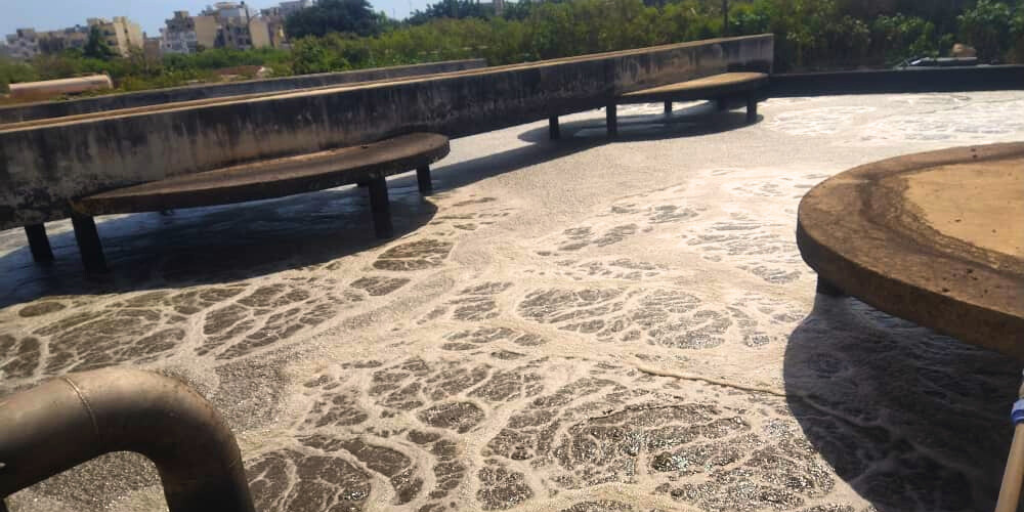
Incatema has built and commissioned a new wastewater treatment plant (WWTP) in Cambérène, a district north of Dakar (Senegal), with a capacity to treat 91,634 m3/d, by remodelling and expanding the existing facilities.
The WWTP is fully automated, with the corresponding instrumentation and control system. It also has all the necessary complementary services to minimise environmental impact, such as deodorisation and soundproofing systems.
This infrastructure has been designed with a sludge line that generates, at low environmental cost, biosolids, i.e. sludge treated and stabilised to reduce pathogens, odours and pollutant content. This is done in such a way that these biosolids meet regulatory requirements for their use or valorisation in agriculture, landscaping or soil restoration.
Treatments for obtaining biosolids
To obtain these biosolids, different applications are used in different treatment stages to guarantee their quality and safety:
• Primary treatment for the separation of solids and liquids in wastewater.
• Secondary treatment, anaerobic digestion, in which microorganisms break down organic matter and produce biogas.
• Dehydration and disinfection treatment to reduce humidity and eliminate pathogenic germs.
These processes can be completed with advanced treatments for the elimination of specific contaminations.
Applications and benefits of biosolids for sustainable economy
The treatment of wastewater at the Cambérène WWTP results in the reuse of a considerable part of the treated effluent (11,520 m3/day), which is used for agricultural irrigation. In addition, there is the possibility of using the sludge once it has been dewatered, such as:
• The organic improvement of the soil, providing essential nutrients (nitrogen, phosphorus and potassium), improving its structure and reducing the use of chemical fertilisers.
• The restoration of damaged ecosystems, such as the recovery of degraded soils, helping to re-establish their fertility and water retention capacity.
• As sustainable energy source, used as fuel in generation processes.
Thus, the use of these biosolids generated at the WWTP is contributing to waste recycling by taking advantage of the nutrients and organic matter present in the water waste, preventing it from becoming waste.
The safe use of biosolids requires control actions, such as monitoring of contaminants through laboratory analysis to detect and quantify the presence of heavy metals, pathogens and other contaminants.
Final dilution of treated water at the offshore WWTP
The Cambérène WWTP is connected to the submarine outfall that Incatema has also built. This infrastructure allows the final dilution of a large part of the wastewater, previously treated in the WWTP, at sea. At more than 1,300 meters from the coast, and at a depth of 30 meters, a chemical, physical and biological process takes place naturally due to the ocean's own conditions (temperature, salinity, pressure, ultraviolet radiation and the effect of marine currents), which completes the purification of these waters.
Both the WWTP and the submarine outfall are part of an ambitious project of the Senegalese government to decontaminate the North of the city of Dakar, an area of high pollution, in line with the objectives of the United Nations Agenda 2030.