


4 December, 2024
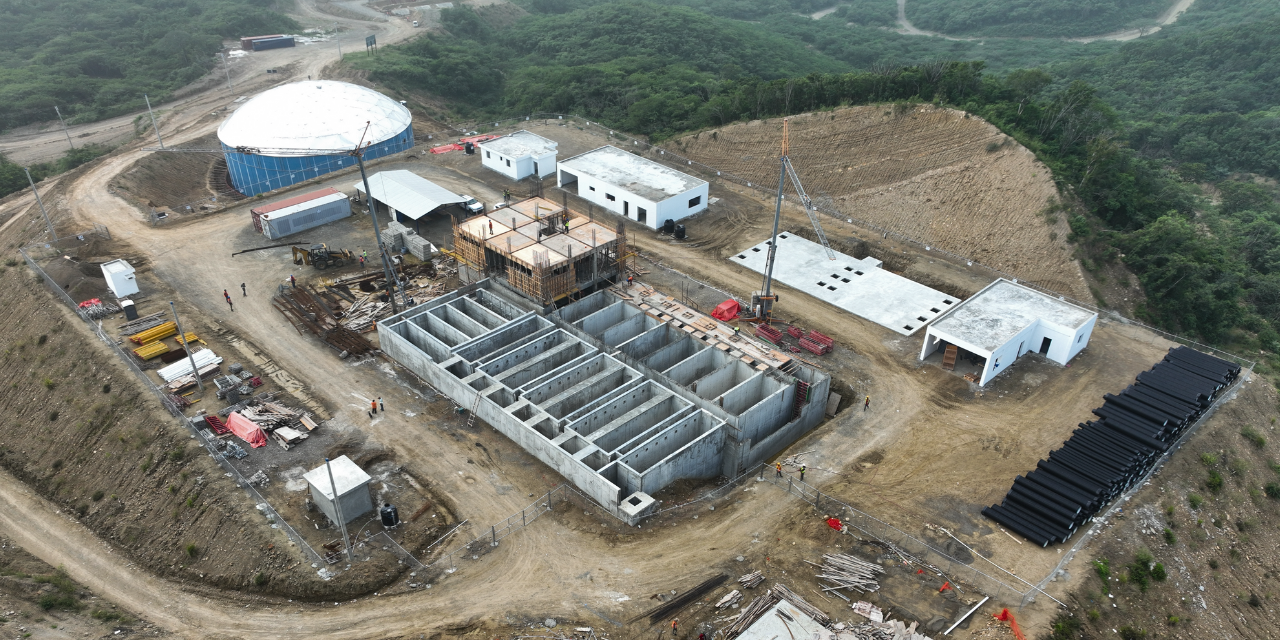
Incatema has started the assembly works of the electromechanical equipment of the Drinking Water Treatment Plant (DWTP) consisting of the installation of a system of gates, valves and flowmeters in the inlet, measurement and flocculation chambers, the installation of valves of different types as well as PVC lamella packets in the settling chamber, the valve system and the blower system in the filter chamber, the chlorination system, in addition to the corresponding dosing pump system, and the valve as well as the gate system in the sludge thickening and sludge drying beds. All this is accompanied by the corresponding electrical installation in both medium and low voltage.
Incatema is thus making good progress in the construction of this plant, which includes a rapid filtration system with a capacity to treat 1,080 m3 per hour. Similarly, the company will soon begin laying the 30-inch diameter fiberglass reinforced polyester (GRP) pipeline from the treatment plant to the 8,000 m3 capacity regulating reservoir.
The Navarrete DWTP construction project is part of a larger project aimed at rehabilitating the existing drinking water supply system that supplies drinking water to seven towns in the Dominican province of Santiago, through the remodelling and expansion of the Sabana-Navarrete aqueduct, commissioned in 1987.
The modernization of this infrastructure, in consortium with the company J. Fortuna, will correct the current deficiencies in its operation and will increase the supply capacity to meet the increase in population in the area.
This is a project promoted by the Instituto Nacional De Aguas Potables y Alcantarillados (INAPA), with a budget of more than 9 million euros, as we reported here.
According to Mr Fernando Díaz, Incatema's Director of Infrastructures, "the drinking water treatment technology applied in this project will guarantee quality standards in the supply of drinking water. In addition, this new DWTP will solve a recurring demand problem in the towns of Navarrete, Villa Bisono, Mejía, Candelones, Villa Tabacalera, Pontón and Cruce de Barrero, which currently have almost 50,000 residents. 50,000 residents, who, given the incapacity of the existing treatment systems, have to travel to fetch water, or acquire it by other means, such as rainwater, purchase of bottles or tanker trucks, or even consume non-potable water, with all that implies for hygiene and health".
The design of this new treatment plant envisions being able to supply a population of up to 150,000 inhabitants in the horizon year for which it has been designed. It is important to highlight the efficiency and environmental sustainability of the project, in line with the sustainable development goals of the 2030 Agenda, specifically Goal 6, Clean Water and Sanitation and Goal 3, Health and Wellness.