


11 July, 2025
By Mr. José Ángel Carrillo, agronomist engineer at Incatema, specialist in New Technologies and Agroindustrial Digital Transformation.
African agriculture is going through a decisive stage. With a population that could reach 2.5 billion people by 2050, according to the UN, and despite increasing pressure from climate change, the continent's agri-food systems have the capacity to adapt and transform rapidly. In this scenario, artificial intelligence (AI) and big data are not technological luxuries: they are vital tools to produce better and more sustainably.
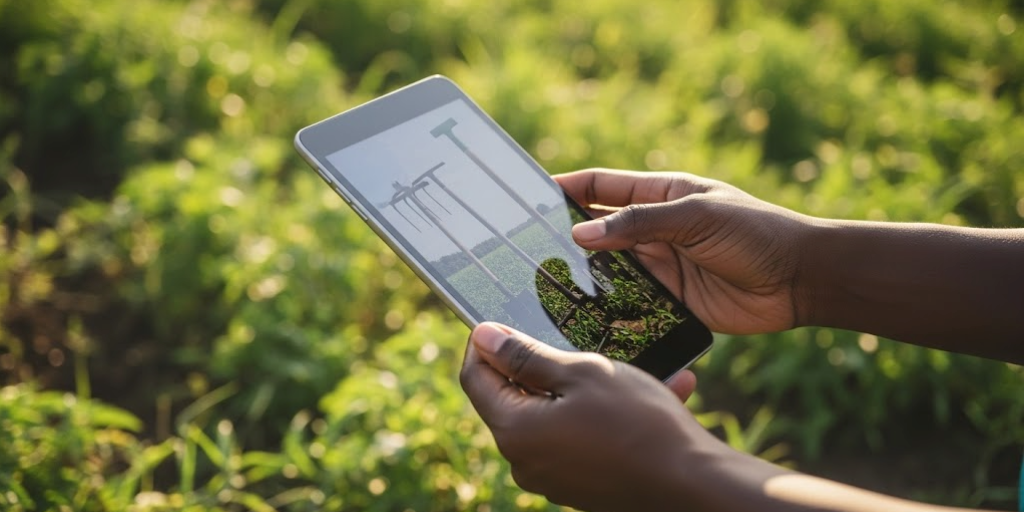
These technologies are already redefining African agriculture. From Ethiopia to Ghana, algorithms, sensors and predictive analytics are helping to make informed decisions, optimise resources and reduce losses. It is a quiet but powerful revolution, which is occurring even in small plots of land.
In Kenya, for example, the Plant Village Nuru app allows farmers to diagnose maize and cassava pests by simply taking a photo. In Nigeria, the Hello Tractor platform connects farmers with tractors using AI to optimise routes and times. In Ghana, the Sat4Farming project uses satellite imagery to advise cocoa farmers.
While agriculture has received a great deal of digital attention, African livestock farming, key to millions of families, is also beginning to benefit from innovation and Incatema is playing a decisive role as a catalyst in this process. An emblematic example of this transition in Africa is Angola, where pastoral systems are intimately linked to food security, rural incomes and social stability.
Angola has more than 5 million head of cattle, concentrated in provinces such as Huíla, Bié, Cunene and Cuando Cubango. This livestock farming is connected to the future through the use of new technologies, which are changing the way animals are raised, monitored and marketed:
• Smart sensors and AI for animal health: with portable sensors, the physiological state of livestock is monitored, with early detection of diseases such as foot-and-mouth disease or trypanosomiasis through predictive models.
• Digital traceability: mobile platforms and Blockchain allow recording the sanitary and commercial history of each animal, facilitating export and sanitary control.
• Forage management with big data: thanks to satellite images and climate data, grazing rotations are planned in semi-arid areas, improving resilience to drought.
• Mobile livestock markets: apps that connect rural livestock farmers with urban buyers and meat companies, optimising sales prices and reducing dependence on intermediaries.
If Angola leads the way, digital technologies in agriculture and livestock offer a range of solutions for the entire continent, although structural challenges remain, such as poor connectivity in rural areas, lack of technical training, poor availability of local data and limited funding for digital innovation that is also fully adapted to the African context.
The good news is that the change is still underway and in areas such as Angola, and in Cameroon, in Adamaoua in particular, there are initiatives and projects where AI is being used to digitise and manage agriculture and livestock, with a direct impact on the lives of thousands of rural families. Local and foreign universities, young people, farmers, agricultural cooperatives and pastoral communities are increasingly involved and interconnected. If this digital transformation of African agriculture - and especially the livestock sector - is supported by sustained investment over the long term, the outcome can be very positive.