


29 July, 2026
The programme, funded by the World Bank and implemented by the Tanzania National Irrigation Commission (NIRC) with technical assistance from INCATEMA, has successfully completed the pilot phase involving training and the signing of agreements to improve the sustainable management of irrigation infrastructure in the Iringa region.
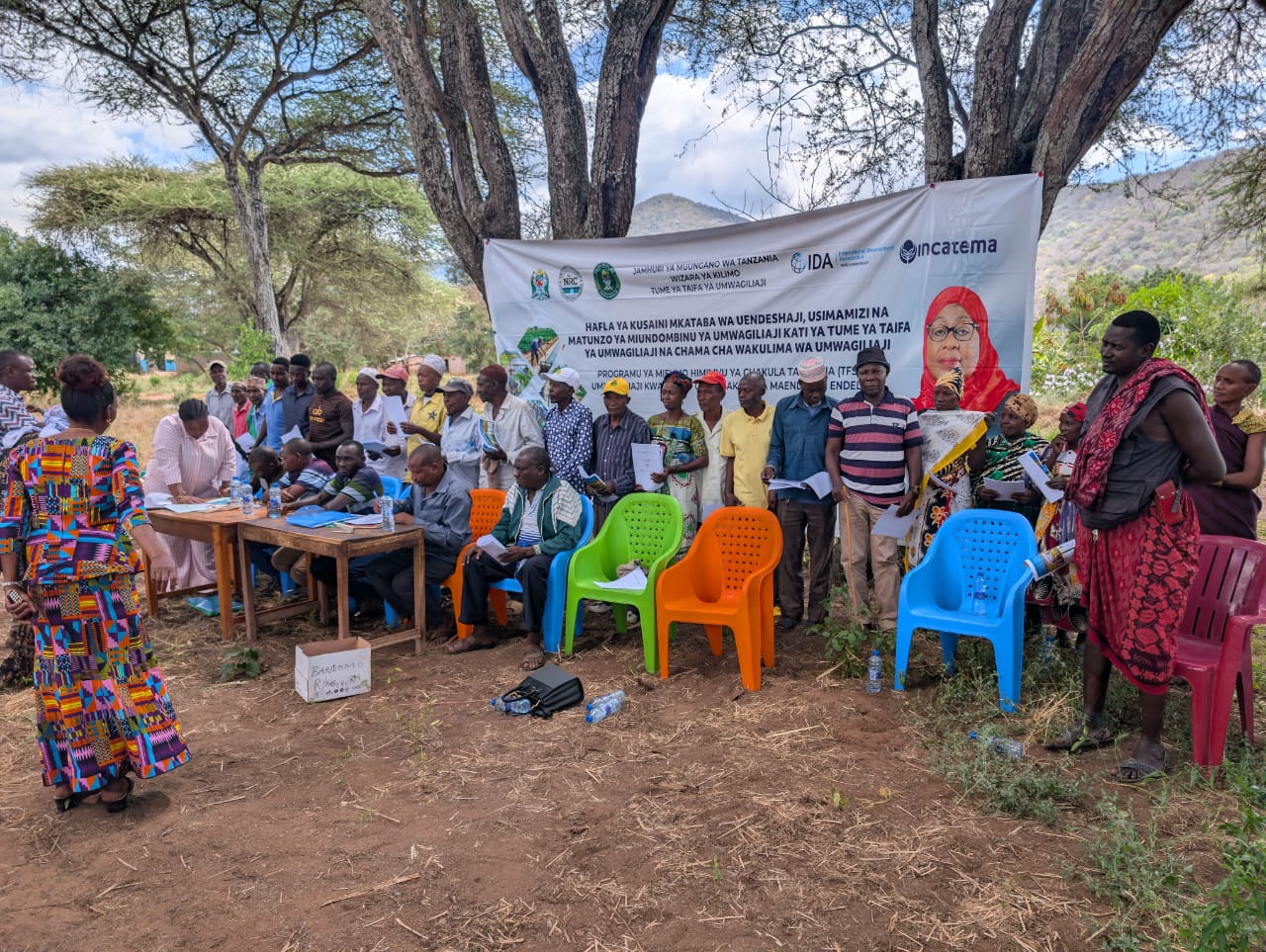
The Tanzania National Irrigation Commission (NIRC), with technical support from Incatema and funding from the World Bank, has successfully completed the pilot phase of technical assistance for the drafting of agreements on the operation, management and maintenance of irrigation schemes within the Tanzania Food Systems Resilience Programme (TFSRP). In this context, training for farmers has been completed and the agreements have been signed for three irrigation systems in the Iringa region: Magozi, Mgowelo and Nyanzwa.
The initiative marks a milestone in the national programme for the modernisation of irrigation, establishing a model of shared management between the public administration and irrigation communities, with the aim of ensuring a more efficient, sustainable and participatory operation of irrigation infrastructure, as we already explained here.
Training for sustainable water management
During the field phase, a team of 30 facilitators — 15 from the NIRC and another 15 from INCATEMA — delivered eight training modules aimed at leaders of irrigation communities, farmers and local authorities. The content covered aspects such as organisational governance, water distribution, infrastructure maintenance, financial management, environmental conservation and social inclusion.
In total, 83 participants received specific training, whilst 347 farmers subsequently took part in the general assemblies held to approve and sign the new management agreements in the three pilot systems. The agreements were unanimously endorsed in all three communities, reflecting the high level of commitment among users to the new management model.
A model of shared responsibility between institutions and farmers
The agreements establish a clear division of responsibilities between the National Irrigation Commission and the Irrigation Communities. Whilst the NIRC retains responsibility for the main irrigation infrastructure, the irrigation communities will take on the operation and maintenance of the secondary and tertiary networks, thereby strengthening local management and the sustainability of the service.
“The real success of this project lies not only in the signing of the agreements, but in the fact that the farmers themselves have taken on a leading role in managing infrastructure that is essential to their future. We have helped to create a governance model that will strengthen the resilience of these communities and ensure a more efficient use of water,” emphasises Mrs Ana González, project director.
The pilot scheme will serve to expand the programme
The project also helped to identify significant common challenges across the three irrigation systems, such as sediment build-up in the canals, the need to step up preventive maintenance, and the low participation of women in the irrigation communities – issues that will be addressed through specific measures as the programme is expanded.
One of the most significant cases was that of the Magozi system, where severe flooding altered the river’s course and damaged part of the main canal. Faced with this situation, the farmers themselves organised community work to build a temporary diversion, which enabled the water supply to be maintained whilst plans were drawn up for the permanent rehabilitation works.
The experience gained from the three pilot projects will now serve as a benchmark for extending this management model to a further 20 irrigation systems covered by Incatema’s current technical assistance programme.
“The response from the communities has shown that, when technical training is combined with local participation and commitment, the results are sustainable over time. This experience will enable us to scale up the model to new irrigation systems with a greater guarantee of success,” adds Mrs González.